2026 PhD Summer School on Autonomous Systems
Politecnico di Bari, Italy
September 7-11, 2026
The Summer School in Autonomous Systems will bring together PhD students and early-stage researchers interested in the theory and applications of autonomous and intelligent systems.
Held in person from September 7 to 11, 2026, at the Politecnico di Bari, the School will feature an intensive program of lectures delivered by leading international experts. Topics will span key scientific areas in autonomous systems, including control, robotics, machine learning, distributed systems, and decision-making.
The school awards 5 ECTS credits, subject to home institution approval.
Technical sponsors


This Summer School has received funding from the European Union – NextGenerationEU, under the National Recovery and Resilience Plan (PNRR).

Industrial Partners

Costs and Fees
Registration for the Summer School DauSy 2026 includes:
- access to all lectures, seminars, and discussion sessions (from September 7 to 11, 2026)
- coffee breaks, lunch, and aperitif on all event days (from September 7 to 11, 2026)
- participation in the social event (September 9, 2026)
- access to the Politecnico di Bari facilities used for the School
- conference materials and credentials.
Registration fees:
- Regular fee: € 244.00 (VAT included)
- Reduced fee: € 152.50 (VAT included) for MSc Students enrolled at the Politecnico di Bari
- Reduced fee: € 122.00 (VAT included) for all DauSy Students enrolled in the 40th cycle, and all DauSy Students enrolled in the 39th cycle without a PNRR scholarship
- Free registration for all DauSy Students enrolled in the 39th cycle with a PNRR scholarship, thanks to the support of the Italian National Recovery and Resilience Plan (Piano Nazionale di Ripresa e Resilienza, NRRP).
How to Apply
Applications to the Summer School DauSy 2026 must be submitted through the official registration form within September 1, 2026.
Program
An overview of the program is provided below. A detailed schedule follows. The program is provisional and will be updated as additional information becomes available.
The school awards 5 ECTS credits, subject to home institution approval.
| Room: AD | |||||
|---|---|---|---|---|---|
Academic Speaker
Lecture bios and abstracts are provided below.

Stability and Transparency in GANs: Synthesis of Neonatal Necrotizing Enterocolitis (NEC) Data
Dario Bauso, University of Groningen, The Netherlands, and University of Palermo, Italy
Dario Bauso has received the Laurea degree in Aeronautical Engineering in 2000 and the Ph.D. degree in Automatic Control and System Theory in 2004 from the University of Palermo, Italy. Since 2018 he has been with the Jan C. Willems Center for Systems and Control, ENTEG, Faculty of Science and Engineering, University of Groningen (The Netherlands), where he is currently Full Professor and Chair of Operations Research for Engineering Systems. Since 2005 he has also been with the Dipartimento di Ingegneria, University of Palermo (Italy). Since 2018 he has been a guest professor at Keio University, Japan. His research interests are in the field of Optimization, Optimal and Distributed Control, and Game Theory. Bauso was an Associate Editor of IEEE Transactions on Automatic Control from 2011 to 2016, of IFAC Automatica from 2015 to 2021, of IEEE Control Systems Letters from 2016 to 2021, of Dynamic Games and Applications from 2011 to 2022, and is Associate Editor of Journal of Dynamics and Games since 2019.
The deployment of Generative Adversarial Networks (GANs) in clinical settings—specifically for the synthesis of rare disease data such as Neonatal Necrotizing Enterocolitis (NEC)—presents unique challenges in privacy preservation, robustness, and performance. In the medical domain, strict legal and ethical requirements demand that synthetic data generation be not only high-fidelity but also numerically stable and theoretically grounded. These constraints serve as a critical testbed, stimulating new scientific questions regarding the fundamental convergence properties of adversarial learning. In this talk, we address the persistent issue of training instabilities—often manifesting as oscillations in parameter space—which can compromise the reliability of synthetic medical cohorts. We derive a theoretical framework to quantify these dynamics by linearizing the GAN Jacobian near equilibrium, identifying two distinct interaction regimes: a latent-mediated weight interaction and a direct bias-bias coupling. By reducing the high-dimensional game to a system of coupled “adversarial springs”, we obtain closed-form expressions for the natural frequency of the system, ω. Our analysis reveals that this frequency scales with the geometric mean of the learning rates (ηD ηG)^(1/2) and is modulated by the generator activation sensitivity G(1-G). We validate these predictions through numerical experiments, demonstrating that bias-bias interactions dominate the observed fluctuations. Spectral analysis confirms our frequency scaling law with high precision, providing a robust metric for predicting limit-cycle behavior and ensuring the stability necessary for sensitive clinical applications.

Electroactive materials for soft and wearable robots
Vito Cacucciolo, Politecnico di Bari, Italy
Vito Cacucciolo is a professor at Politecnico di Bari, research affiliate at MIT and CEO of spin-off Omnigrasp, working to push the boundaries of soft-matter machines and robotic materials both in academia and industry. He received the ERC StG for the project Robofluid in 2023 to create the next generation of digital fluidics. Vito has been the driving force behind the development of the world-first stretchable pumps for fluidic artificial muscles published in Nature in 2019 and has contributed to the development of the first fiber pumps for untethered textile exoskeletons and haptics using fluidics, published in Science in 2023. Vito created an electroadhesion-based soft gripper for delicate and fragile objects that can lift 1000 times its own weight. He was awarded the prestigious SNSF Bridge PoC fellowship for tech. transfer in 2020. Vito received his PhD from Scuola Superiore Sant’Anna Pisa (Italy) in 2017 (Prof. Laschi’s group). The PhD focused on soft robotics and on the understanding of muscle activation and control in cephalopods (e.g., the Octopus) using mathematical models and bio-inspired AI algorithms. From 2017 to 2021 Vito worked as a scientist at EPFL (Prof. Shea’s group), where he worked on miniaturised and integrated artificial muscles for the next generation of robots and wearables Vito published 19 articles in peer-reviewed journals and 14 articles in peer-reviewed conference proceedings, has an h-index of 16 and 3000 citations. Vito’s long-term goal is to understand physical intelligence and use it to create adaptive materials, human-centred robots and wearables, to relieve humans of weary hard work and disabilities
Electro-active robotic materials are the interface between the digital world and the physical one. They produce force/motion in response to an electrical stimulus (artificial muscles) and generate electrical signals in response to physical stimuli (soft sensors). Some materials can change their bulk or surface properties responding to a digital input (electro-active and variable stiffness materials).
My work has focused on electro-fluidic artificial muscles and electro-active soft grippers. These solid-state soft devices are silent, flexible, and miniaturized. They offer a path towards highly integrated responsive materials for the next generation of intelligent robots and active wearables.
In this talk, I will first discuss the force/softness dilemma in soft robotics and how we leverage electro-adhesion on soft fingers to develop grippers that are at the same time delicate enough to pick a ripe tomato and so strong to lift 1000 times their own weight. These grippers can also grasp flexible objects such as fabric and plastic pouches. This technology is now being commercialized by the spin-off company Omnigrasp SRL and has been part of three EU-funded projects.
I will then present our work on solid-state soft pumps, as a means of using fluids to decouple electrical transducers from mechanical motion, easing material and fabrication requirements. Our solid-state pumps solve the challenge of integrating fluid circulation in soft robots and wearables, replacing noisy and bulk pumps and compressors with stretchable or fiber-shaped pumps. This research has been awarded an ERC grant by the European Union.

Recent Advances in Distributed Optimization and its application to Distributed Machine Learning
Subhrakanti Dey, Uppsala University, Sweden
Subhrakanti Dey received the Ph.D. degree from the Department of Systems Engineering, Research School of Information Sciences and Engineering, Australian National University, Canberra, in 1996.
He is currently a Professor and Head of the Signals and Systems division in the Dept of Electrical Engineering at Uppsala University, Sweden. He has also held professorial positions at NUI Maynooth, Ireland and University of Melbourne, Australia. His current research interests include networked control systems, distributed machine learning and optimization, and cyber-physical security. He is a Senior Editor for IEEE Transactions of Control of Network Systems and IEEE Control Systems Letters, and an Associate Editor for Automatica. He is a Fellow of the IEEE.
In this lecture, we will consider the problem of distributed multi-agent optimization and its application to distributed machine learning, where the global aim is to minimize a sum of local objective (empirical loss) functions through local optimization and information exchange with a central server (also known as Federated Learning) or between neighbouring nodes (in the absence of a central server). After a brief introduction to distributed optimization with first-order gradient based methods, we will introduce some approximate Newton-type distributed optimization algorithms. In particular, we will discuss two recently proposed algorithms, SHED (Federated) and Network-GIANT (fully distributed) second-order algorithms, that are communication- and computation-efficient and provide significant improvements in convergence speeds compared to their first-order counterparts. We will show that SHED guarantees a superlinear convergence rate, whereas Network-GIANT provides an exponential convergence (also known as linear convergence) to the exact global optimum over the network for strongly convex and smooth loss functions. We also illustrate how Network-GIANT can achieve a faster local linear convergence rate asymptotically as the iterates get closer to the optimum. Recent extensions to compressed information transmission and accelerated (heavy-ball type) versions of Network-GIANT will also be discussed. We will conduct some MATLAB-based numerical studies, illustrating superior convergence performance of these algorithms and their extensions with compression or acceleration, over other state-of-the-art distributed learning algorithms and their corresponding counterparts.
Biomimicry for Sustainable Agrifood Innovation: From Nature-Inspired Design to Autonomous Greenhouse Monitoring
Mauro Gallo, Inholland University of Applied Sciences, Nederland
Mauro Gallo was born in Naples, Italy, where he studied mechanical engineering at the University of Naples Federico II, subsequently obtaining a PhD in aerospace engineering at the same institution. From 2008 to 2011, he held the position of Senior Researcher at the Institute of Fluid Dynamics of the ETH Zurich. He was subsequently appointed as a lecturer/researcher at Delft University of Technology, where he conducted challenging projects in the fields of non-classical gas dynamics and thermo-fluid dynamics. In 2018, Mauro was appointed Biomimicry Professor at Inholland University of Applied Sciences. His objective is to integrate engineering principles with the principles observed in nature in order to enhance the sustainability and resilience of the agri-food sector.
Biomimicry is an emerging discipline that addresses human challenges by learning from nature’s time-tested strategies. However, creating meaningful and sustainable impact requires more than imitating biological forms or functions; it calls for a fundamental shift in how humans relate to nature. Designers and engineers must adopt systems-oriented perspectives that embrace the interconnectedness, adaptability, and resilience found in living systems. This lecture presents an overview of biomimicry applications across sectors, with a particular focus on agrifood and horticulture. Through inspiring examples, we demonstrate how bio-inspired design can contribute to more sustainable and resilient production systems. A key case study explores the development of a drone-based monitoring system for greenhouse environments that supports integrated pest management. By enabling continuous crop monitoring, reducing reliance on manual labour, and significantly decreasing pesticide use, the system illustrates the practical value of biomimetic innovation in controlled-environment agriculture. Drawing inspiration from nature at multiple levels of biological organization, biomimetic principles have guided the design of flapping-wing mechanisms, compact power systems, autonomous multi-robot coordination, and swarm-based control strategies. We also present advances in artificial intelligence and deep-learning methods for automated pest identification and quantification using data collected by drone swarms. Together, these technologies enable high-resolution monitoring and early pest detection, supporting more efficient and sustainable crop protection practices. While such innovations highlight the potential of biomimicry, their benefits may be limited if design focuses solely on technological imitation. To fully realize its promise, biomimicry must also incorporate nature’s broader principles of interconnectedness and ecological integration. The lecture concludes by discussing the challenges and opportunities of adopting these perspectives in engineering and design, and how they can contribute to the development of future agrifood systems that are not only efficient and productive, but also regenerative and resilient.
Multi-Agent Decision-Making with Probabilistic Guarantees Under a Data-Driven Privacy Framework
Maria Prandini, Politecnico di Milano, Milano, Italy
Maria Prandini is full professor in Automatic Control at Politecnico di Milano, Italy.
She is highly active in the international control community, serving as IFAC President-elect for the triennium 2023-2026, and having previously served as Vice-President for conference activities for both IFAC and IEEE CSS.
Elected Fellow of the IEEE in 2020, she received the IEEE CSS Distinguished Member award in 2018. Her international standing includes appointments as Visiting Professor in Engineering at the University of Oxford (2022-2028) and WASP Guest Professor at Lund University (2026-2027).
Her research interests include distributed and data-driven optimization, federated learning in multi-agent systems, and the application of control theory to transportation and energy systems.
We consider multi-agent decision-making problems, where agents cooperate to reach an agreement on a common decision or on the share of a common resource. We investigate the setting where the environment within which agents operate is uncertain, each agent has access to a finite amount of data on the uncertain phenomenon, and these data constitute a private resource that is not to be exchanged or shared among agents. We provide a data driven framework to address these problems, and show how to accompany decisions in such a private-data regime with probabilistic certificates of robustness using tools from the so called scenario approach. Moreover, we discuss how such decisions can be computed in a distributed manner. To this end, we presented a general distributed architecture as a multi-agent information exchange mechanism, and illustrated it by outlining specific algorithms to solve decision and constraint couple optimization problems.

LLM-empowered engineering of automation systems
Valeriy Vyatkin, Aalto University, Helsinki, Finland, and Luleå University of Technology, Luleå, Sweden
Valeriy Vyatkin is Professor of Information Technologies in Automation at Aalto University, Finland, and holds a Visiting Professor of Computer Science appointment at Luleå University of Technology, Sweden. After obtaining a PhD degree in Applied Computer Science in Russia in 1992, he earned a second PhD degree in Electrical Engineering from Nagoya Institute of Technology in 1999. An IEEE Fellow and the recent Vice President for Technical Activities of the IEEE Industrial Electronics Society (2022-25), he is an internationally recognised leader in industrial automation and applied artificial intelligence.
His research focuses on applying AI to industrial automation, covering swarm intelligence for decentralised decision making in cyber-physical systems, multi-agent software architectures, AI-assisted systems and software engineering, declarative knowledge modelling, and real-time logical inference for flexible, reconfigurable systems. He directs the Aalto Factory of the Future laboratory. In the past decades, he played a leading role in many European projects such as MEDUSA, ZeroSWARM, 1 SWARM, ERA-NET, Arrowhead fPVN and DAEDALUS, as well as national projects funded by NSF, VR, the Research Council of Finland, and other funding agencies in Japan, Germany, New Zealand, Sweden, Finland, and the EU. His expertise spans information technologies in factory automation, SmartGrid, material handling, datacentres modelling and automation, building management systems, and reconfigurable manufacturing, enabling organisations to navigate digital transformation in manufacturing, energy, logistics and embedded systems, and to build AI augmented, dependable engineering teams.
Large language models (LLMs) are rapidly reshaping software engineering, and industrial automation is poised to benefit from this transformation. In this talk, we explore how LLM-based development can address the shortage of automation engineers, accelerate the engineering lifecycle, and improve the reliability of safety-critical control systems, particularly in distributed and decentralised automation architectures. We begin by revisiting the emerging practice of vibe coding, where LLMs act as collaborative co-designers and co-programmers. In this paradigm, natural language requirements are translated into executable artefacts—such as PLC code and state-machine models—and iteratively refined through human–AI dialogue that mirrors expert engineering collaboration. Building on this foundation, we explore the transition toward agentic development, where autonomous, goal-driven AI agents assume higher-level responsibilities, including system decomposition, multi-component orchestration, dependency management, and adaptation to evolving operational constraints. The talk traces the role of LLMs across the entire engineering lifecycle—from requirements elicitation and system design to implementation, testing, and deployment—illustrated through concrete examples in PLC programming and SCADA configuration. However, it is yet to be demonstrated how agentic AI can be reliably integrated into established multi-agent architectures for industrial automation. While LLM-based agents offer new capabilities in reasoning and orchestration, their role in safety-critical, real-time, and deterministic systems remains an open research question. AI-assisted generation already shows strong potential to significantly reduce development time, while AI-driven verification, formal reasoning support, and automated test case synthesis can enhance robustness in safety-critical environments. Moreover, LLMs may enable tighter integration of reasoning engines, multi-agent coordination, and declarative knowledge models within industrial control platforms, supporting more context-aware decision-making. To prepare for this potential paradigm shift, we outline strategies for transforming engineering teams into AI-augmented and AI-orchestrated ecosystems, addressing key challenges such as workforce reskilling, governance, verification, and safety assurance. By combining LLM-based engineering support with swarm-inspired coordination and declarative modelling, this talk presents a vision and practical roadmap towards adaptive, high-integrity industrial automation systems capable of scaling with the accelerating pace of industrial digital transformation.

Enhanced Model Reference Adaptive Control: Theory and Engineering Applications
Umberto Montanaro, University of Surrey, Surrey, England
Umberto Montanaro received the M.Sc. degree in Computer Science Engineering, the Ph.D. degree in Control Engineering, and the Ph.D. degree in Mechanical Engineering from the University of Naples Federico II, Naples, Italy, in 2005, 2009, and 2016, respectively. From February 2010 to January 2013, he was a Research Fellow at the Italian National Research Council (CNR), Istituto Motori. He is currently a Senior Lecturer in Control Engineering and Autonomous Systems at the University of Surrey, Guildford, U.K. He is the Founder and Director of the Surrey Team for the Control of Smart Multi-Agent Systems Operating Autonomously and Synergistically (Su-COSMOS). His research interests include control theory and its applications to mechatronics, automotive systems, and the coordination of networked autonomous systems.
Model Reference Adaptive Control (MRAC) is one of the fundamental approaches in adaptive control, enabling systems with uncertain dynamics to achieve prescribed performance by tracking a reference model. This lecture presents enhanced MRAC methods and demonstrates their application to a range of engineering control problems. The lecture begins with an overview of the MRAC problem formulation and the key analytical tools used to establish closed-loop stability, together with their role in deriving adaptive laws that guarantee boundedness and convergence. The lecture then focuses on Enhanced Model Reference Adaptive Control (EMRAC) and its variants, including closed-loop reference model approaches for output-feedback adaptive control and the integration of neural networks to improve reference model tracking. The design of these methods is illustrated through representative engineering applications, with case studies on adaptive control of automotive components and path tracking for autonomous ground vehicles. Through these case studies, the practical benefits and implementation considerations of enhanced MRAC techniques are examined, providing participants with both a sound theoretical understanding and practical insights relevant to research and engineering practice in adaptive control.
Industrial Speaker


AI for Industrial Robotics: Challenges of a Paradigm Shift
Luca Di Ruscio, Software Technologies Engineer, COMAU S.p.A., Italy
Luca Di Ruscio earned his Master’s Degree in Mechatronic Engineering from Politecnico di Torino in 2021. Following his graduation, he joined the Cognitive Automation team at Comau, focusing on developing advanced capabilities for industrial robots. Leveraging his expertise in Computer Vision, Robotics Simulation, and AI, he currently develops tailor-made robotic solutions to meet specific customer needs.
Industrial robotics is currently undergoing a profound paradigm shift. Historically, manufacturing processes have relied on classical control approaches—offering unparalleled precision, speed, and reliability, yet often lacking the flexibility required to adapt to dynamic, unstructured environments. This talk traces the evolution of Artificial Intelligence within robotics, exploring how the transition from rigid programming to data-driven learning is redefining modern automation.


A Parametric and Modular PLC Software Platform for Automated Storage Systems: The SILO2/RIGO Case Study
Giovanni Zito, Junior Automation Software Designer, ICAM S.p.A., Italy
Giovanni Zito received his M.Sc. degree in Automation Engineering from the Politecnico di Bari, Italy. He carried out his Master’s thesis in collaboration with ICAM S.p.A., focusing on PLC-based control systems for automated storage solutions. After graduation, he joined ICAM S.p.A. as a Junior Automation Software Designer, contributing to the development of software solutions for intelligent warehouse automation.
Automated storage and retrieval systems must accommodate wide variability in warehouse layout, dimensions, and operator interfaces, while keeping engineering and commissioning effort low. This talk presents the software platform developed by ICAM for the PLC control of its SILO2 (vertical-development) and RIGO (horizontal-development) warehouse product lines. Built in Beckhoff’s TwinCAT environment using object-oriented programming, the platform is structured around a single codebase that is verticalized onto either product through compiler pragmas, avoiding duplicated or forked solutions. Pragma selection, along with full solution configuration, is handled by a proprietary engineering tool built on Beckhoff’s Automation Interface. The tool tailors each deployment to project-specific parameters — such as the number of operator interface points and warehouse height — and automatically generates the parametrization for the drives governing axis motion. Recent work has extended the platform with support for a master-slave electric axis configuration for vertical movement, improving synchronization and dynamic performance. Ongoing development is focused on integrating manipulators to support automated picking within the load-handling shuttle, further extending the platform’s modularity toward manipulation tasks. The talk will discuss the architectural choices behind the platform, the configuration-tool workflow, and lessons learned from applying a single parametric codebase across a broad range of warehouse configurations.
A Parametric and Modular PLC Software Platform for Automated Storage Systems: The SILO2/RIGO Case Study
Cosima de Candia, Junior Automation Software Designer, ICAM S.p.A., Italy
Cosima de Candia holds a Bachelor’s degree in Aerospace Systems Engineering and a Master’s degree in Automation Engineering from the Politecnico di Bari where she designed and built several hands-on projects, including a six-axis system for drone testing and an ultrasonic acoustic levitator. After completing her studies, she joined ICAM as a Junior Automation Software Designer in the Research & Development department, where she develops intelligent automation solutions for automated warehouses, working on PLC programming and researching new control architectures.
Automated storage and retrieval systems must accommodate wide variability in warehouse layout, dimensions, and operator interfaces, while keeping engineering and commissioning effort low. This talk presents the software platform developed by ICAM for the PLC control of its SILO2 (vertical-development) and RIGO (horizontal-development) warehouse product lines. Built in Beckhoff’s TwinCAT environment using object-oriented programming, the platform is structured around a single codebase that is verticalized onto either product through compiler pragmas, avoiding duplicated or forked solutions. Pragma selection, along with full solution configuration, is handled by a proprietary engineering tool built on Beckhoff’s Automation Interface. The tool tailors each deployment to project-specific parameters — such as the number of operator interface points and warehouse height — and automatically generates the parametrization for the drives governing axis motion. Recent work has extended the platform with support for a master-slave electric axis configuration for vertical movement, improving synchronization and dynamic performance. Ongoing development is focused on integrating manipulators to support automated picking within the load-handling shuttle, further extending the platform’s modularity toward manipulation tasks. The talk will discuss the architectural choices behind the platform, the configuration-tool workflow, and lessons learned from applying a single parametric codebase across a broad range of warehouse configurations.

Robotics… sustainable, efficient and special
Mirko Daniele Comparetti, Key Technology Manager for Autonomous Mobile Robots – EMEA, KUKA., Italy
In a world where technology increasingly shapes everyday life, I turned curiosity into my profession. During a joint PhD in Biomedical and Biomechanical Engineering at the Politecnico universities of Milan, Turin, and Bari, I specialized in collaborative robot control for innovative neurosurgical applications within EU-funded research projects.
My career has spanned industrial automation, robotic production lines, and electronic product development for the home appliance sector, with international experience in Karlsruhe and New York City. This path has given me a multidisciplinary perspective connecting research, industry, and innovation.
Today, at KUKA, I support the adoption of mobile robotics solutions across EMEA and LATAM, helping create synergies between people, data, and machines. I believe innovation delivers real value when advanced technologies improve the way people live and work.
Outside work, travel and photography continue to inspire my curiosity and broaden my perspective.
Mobile robotics is not just an emerging technology; it is one of the key enablers for rethinking how we manufacture, move materials, and utilize resources within modern industries. Starting from the fundamentals of mobile robotics and its most innovative applications, we will explore how automation can help create smarter, more efficient, and more sustainable processes. Through real-world examples, we will see how the integration of people, data, and machines can generate value not only for businesses, but also for the environment and society. In a world where competitiveness and sustainability are becoming increasingly interconnected, the real challenge is no longer whether to automate, but how to do so in a responsible, efficient, and sustainable way. Mobile robotics is emerging as one of the key technologies driving this transformation and helping shape the industry of the future.
Driving the Future of Automation: Digital Transformation and Green-Tech Innovation at Masmec
Vito Lazazzera, Innovation Director – Automotive Division – MASMEC SpA
Graduated in Polytechnic of Bari, Vito Lazazzera is a mechanical senior engineer, director of innovation for the automotive division in Masmec S.p.A. Lean six sigma certified, his main activities include the definition of R&D program, the industrialization of internal products and processes optimized by emerging digital technologies. He also leads the consulting services in engineering and manufacturing for a customers performance improvement.
As global industries transition toward sustainability and smart manufacturing, digitalizing processes and products has become essential for long-term competitiveness. This session offers an overview of Masmec, a leader in advanced industrial automation, with a specific focus on its dedicated Technological Innovation and R&D department.
The presentation highlights how Masmec continuously explores emerging technologies to transform traditional engineering into flexible, data-driven solutions. By integrating cutting-edge software architectures, real-time monitoring, and modular design, the innovation team turns complex industrial challenges into scalable market opportunities. Special attention is given to Masmec’s strategic expansion into the green-tech sector, detailing how digitalized systems—such as advanced battery loading/unloading stations, electrolyzer assembly lines, and fuel cell test benches—are shaping the next era of sustainable manufacturing.
In this lecture, I will present how Masmec bridges high-precision engineering with forward-looking digital strategies to pioneer the future of industrial automation.

From Internal Innovation to Market Success: The Commercialization of MASMEC’s Press-Fit Unit
Lucillla Dammacco, Technology Specialist – R&D – MASMEC SpA
Lucilla Dammacco is a Technology Specialist at Masmec S.p.A. and holds a Ph.D. in Industry 4.0 from Politecnico di Bari. With 6 years of experience in process optimization and industrial digitalization, she oversees technical leadership and R&D coordination for complex manufacturing lines in the automotive and industrial sectors. Her expertise centers on integrating key enabling technologies—such as Digital Twins, Discrete Event Simulation, Virtual Commissioning, and Extended Reality (VR/AR)—into Smart Manufacturing systems.
In modern manufacturing, transitioning from custom, project-specific engineering to scalable, standardized products is a major driver of industrial innovation. This session explores how Masmec’s R&D division reshaped its proprietary press-fitting technology—the Armax press—from an internal assembly capability into a standalone, market-ready solution.
By analyzing the shift from an Engineer-to-Order (ETO) logic to a modular, standardized Make-to-Order (MTO) framework, the discussion highlights how defining clear system parameters enables product scalability without sacrificing precision. Furthermore, it details the technological edge gained by replacing traditional, rigid industrial software with a dynamic, browser-based Web App architecture for real-time monitoring and remote adaptability.
In this lecture, I will present modular design principles, and product management frameworks that drive digital disruption in Industry 4.0 environments.


Autonomous Mobile Robotics in Industrial Applications: The PAL Robotics Perspective
Michela Cavuoto, Robotic Software Engineer, PAL Robotics, Spain
Michela Cavuoto is a Robotic Software Engineer at PAL Robotics within the Mobile Interaction team, where she focuses on mobile manipulation and software development for the TIAGo Pro platform. With a Master’s degree in Automation Engineering from the University of Bologna and a background in robotics research, she specializes in advanced manipulation and real-time control for industrial applications. Alongside her technical work, she serves as Technical Project Manager for European and commercial industrial projects, overseeing platform-level integration and testing for advanced tools, including LLMs and quantum cryptography.
Industrial robotics is shifting toward greater flexibility, mobility, and autonomy, complementing traditional automation with platforms capable of perceiving complex surroundings and interacting seamlessly with human workers. Drawing on PAL Robotics’ field experience, this talk traces the step-by-step progression of mobile robotics: starting with autonomous navigation, integrating intuitive human-robot interaction, and ultimately combining perception with manipulation on mobile platforms. To conclude, we explore the latest research trends, highlighting how artificial intelligence and humanoid robotics are addressing the challenges of unstructured industrial environments.
Organizers
Scientific Committee
- Mariagrazia Dotoli, Polytechnic University of Bari
- Raffaele Carli, Polytechnic University of Bari
- Alberto Cavallo, University of Campania Luigi Vanvitelli
- Laura Giarrè, University of Modena and Reggio Emilia
- Federica Pascucci, Roma Tre University
Local Arrangement Committee
- Paolo Scarabaggio, Polytechnic University of Bari
- Nicola Mignoni, Polytechnic University of Bari
Secretary
- Rossella & Vittoria (Emails: congressi@cicsud.it, vittoria@cicsud.it)
Venue
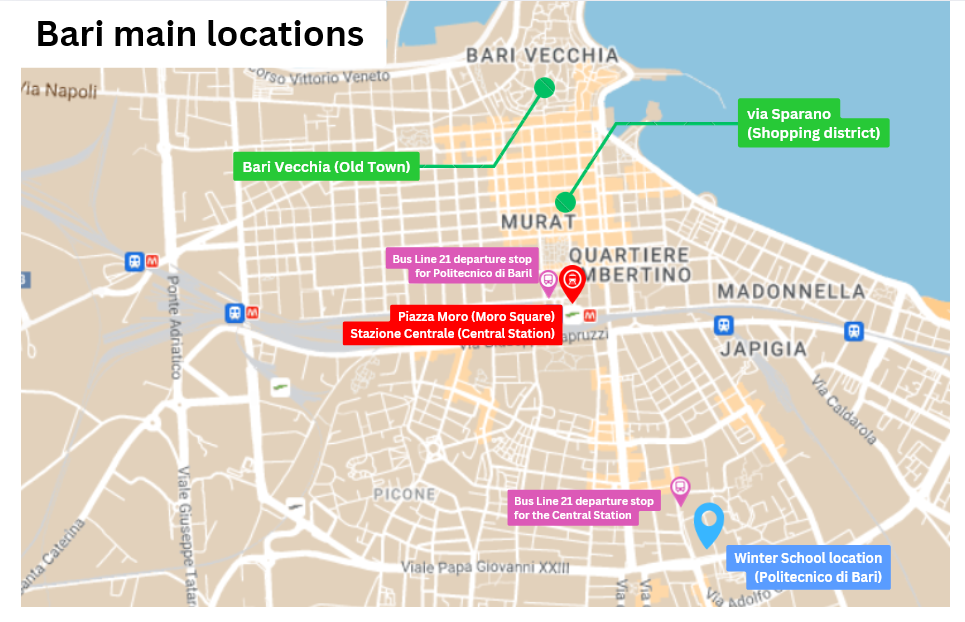
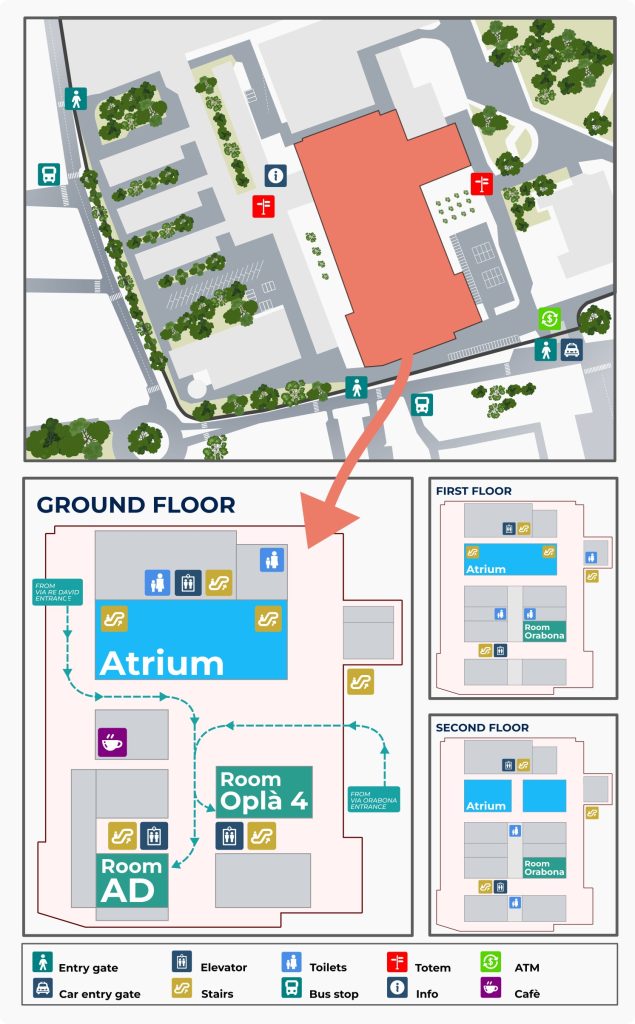
The PhD school will take place at Politecnico di Bari, the Technical University of Bari, located in Bari, Italy, at via E. Orabona 4, 70125.
Established in 1990, Politecnico di Bari stands as the most recently founded Polytechnic University in Italy. It is characterized by a strong emphasis on technology and science, playing a crucial role in shaping the intellectual landscape of aspiring architects, engineers, and industrial designers.
A map of Bari with the location of the school is provided below.
A floor plan of Politecnico di Bari with the main room is provided below.
Getting Around Bari
Bari is a compact and welcoming city, easy to explore on foot or using its urban transport options. Walking is generally safe and pleasant, but please stay alert when crossing roads—even at pedestrian crossings.
The AMTAB urban transport network is the most convenient option for reaching Bari’s key locations and most charming areas, including the Politecnico. Several bus lines connect the Main Railway Station (Piazza Aldo Moro) to the Politecnico di Bari and other city destinations.
- Ticket prices: Approx. €1 at authorized retailers; €1.50 if purchased directly on board.
- Timetables and stops: Visit the AMTAB website or use the MUVT app (also available in English for iOS and Android) to check real-time schedules, create itineraries, and buy tickets directly from your smartphone.
- Travel tip: Google Maps also provides reliable directions and public transport info in Bari.
Taxis are readily available throughout the city. We recommend downloading the itTaxi app for convenient bookings. For additional information, visit www.taxibari.it.
Bari is embracing eco-sustainable mobility, offering a variety of shared transportation services:
Bike Sharing – VAIMOO
For a sustainable and active way to get around, use the VAIMOO app (iOS/Android) to find available bikes and enjoy Bari at your own pace.
Electric Kick Scooters
Easily rentable through dedicated mobile apps, scooters can be located on an interactive map showing availability and battery level. Simply scan the QR code to unlock. The system is free-flow, allowing one-way trips with flexible drop-off.
Providers: Lime, Tier, Bit, Telepass
Rates: ~€1 to unlock, €0.15–€0.22/min to ride, €0.05/min when paused.
Piky Electric Microcars and Scooters
Compact, colorful, and fully electric, Piky vehicles are ideal for urban mobility. Download the PikyRent Urban Mobility App (iOS/Android) to locate and rent vehicles.
Accomodation
Several hotels and B&Bs are available, and we recommend using platforms such as Airbnb or Booking.com to explore options. Please note that we have no formal agreements with these independent providers.
Most hotels are within walking distance, while others are easily accessible by public transportation. To determine the distance between these hotels and the conference venue, use the official Bari Public Transportation travel planner at https://www.mycicero.it/muvt/TPWebPortal/en
Travel Information
All participants must ensure that they have obtained a visa that may be required to visit Italy before travelling.
Please contact your travel agent and/or the Italian Consulate/Embassy in your country for the latest information on the Italy visa issue as soon as possible. Visa processing time may vary. You are advised to make a visa application at your earliest convenience if it is needed. You should allow approximately 12 weeks before the event, although this process may take longer in some countries. Information on visa requirements can be found at https://vistoperitalia.esteri.it/home/en, where a simple form will guide you through a series of steps based on your country of origin. When asked “Reasons for your stay?”, choose “Study” and follow the instructions.
The school venue is located in Bari, which can be easily reached from the International Airport of Bari (BRIIATA), also called Aeroporto Karol Wojtyła. It is located in the north-western part of the city of Bari. Bari Airport is modern and well-organized, and it offers trains, buses, and taxi services for connections with other localities. Carriers include ITA Airways, Lufthansa, Eurowings, Ryanair, and Wizzair.

For travelers arriving from Europe, we recommend considering not only direct flights to Bari but also exploring the option of arriving at the following two airports, which are in close proximity to Bari and can be conveniently reached by train or bus in a short amount of time.
- Flight to Brindisi (BDSIATA): There, you can take a direct bus shuttle to reach the Main Railway Station of Bari (i.e., Bari Centrale). Alternatively you can reach tre Brindisi main train station (Brindisi Centrale) and then take a train to Bari.
- Flight to Naples (NAPIATA): From Naples, you can opt for a direct bus or train to reach Bari Central Station.
For those arriving from outside Europe, we recommend considering a connecting flight through one of these airports, followed by a flight connection to Bari.
- Flight to Roma Fiumicino (FCOIATA): There, you can take a direct flight to Bari Airport (BRIIATA).
- Flight to Milano Malpensa (MXPIATA): There, you can take a direct flight to Bari Airport (BRIIATA).
Bari is also connected by high-speed trains from/to Rome, Milan, Turin, Bologna and Florence. Check the Trenitalia and Italo websites for timetables and prices.

Bari is extensively connected to various cities in Italy, including Naples, Brindisi, and Rome, through a well-developed network of coach services. For convenient and efficient travel, consider checking companies’ offerings, such as FlixBus, Itabus, Marozzi, and Marino. Normally, coaches stop for Bari is at the central bus station on Via Giuseppe Capruzzi.

Bari is the destination for ferries arriving from the Greek ports of Patras and Igoumenitsa. If you are traveling on a Eurorail during the low season, the cost is €16, and during the mid-season, €31. A normal ticket to Igoumenitsa is about €29 on the deck and in low season. There are also ships to Bar and Kotor (Montenegro), Dubrovnik (Croatia), and to Durrës and Vlora (Albania). Ferry operators are either Superfast Ferries, Blue Star Ferries, or Jadrolinija. An up-to-date site with international ferry schedules is here.
Tourism
The Apulia region (or Puglia, as it is known to the locals) is an important economic center in Southern Italy that forms the heel of the Italian boot and is located in the Southern Adriatic Sea.
In recent years Puglia has gradually built a reputation as a bridge between West and East, that mirrors an increasingly multi-cultural, open, tolerant and friendly community, connecting people, individuals and businesses, from different countries and cultures.
The capital city of Puglia is Bari, a modern city that keeps strong ties with its own traditions. Bari has a maritime flavor and deserves a glance for the panoramic seafront promenade.



The origins of Bari are very old, but not well established. Items dating to the Bronze Age have been found in the oldest part of the town; however, most of historians agree that the town was founded between 1600 and 1100 B.C. by Illyrians, coming from the Balcanian peninsula, on the opposite side of the Adriatic Sea. The name probably derives from that of Barione, the leader of one of these Illyrian groups.
The first reliable information on Bari dates back to the 4th century B.C. when it went under Roman rule. In the following centuries, it had a special relation with Rome and Tito Livio underlined its strategic importance.
After the fall of the Roman Empire, Bari was involved in the war between the Goths, and late the Longobards, against the Byzantines.
In the 9th century, after many raids, the Arabs succeeded the Longobards and settled in Bari for about 30 years, setting up an emirate. It lasted until 871 when the army of Ludovico II brought back the city under the Byzantine rule, which on the contrary, did not meet the people’s favour.
In 1071, the city was conquered by the Normans, led by Roberto il Guiscardo, and became part of the dukedom of Apulia and Calabria.
This was the beginning of an important period in the history of Bari. In 1087, St. Nicholas’ holy remains were taken away from Myra (Turkey) by a group of sailors and brought to Bari, where the building of a dedicated Basilica was decided and started immediately. In 1089, the remains were led by Pope Urbano II in the yet-to-be-built crypt of the Basilica (the whole Basilica was completed after about 100 years).
Later on, Bari and all the dukedom of Apulia and Calabria fell under the domination of the Norman King of Sicily, whose dynasty shortly came to an end and was replaced by the Hohenstaufen Swabians; this was the period in which Frederick II (later on crowned also Emperor of Germany) reigned. He loved Apulia (he was called “puer Apuliae”) and built or restored many castles in the region, among which the Bari castle and the famous and mysterious Castel del Monte (on the top of a hill, about 50 km from Bari).
Angevin and Aragon rulers followed for about three centuries. Toward the end of this period, in the 16th century, two women had an important role in history: Isabel of Aragon, widow of the Duke of Milan Gian Galeazzo Sforza, who enlarged the castle, making it her private residence, and Bona Sforza, Queen of Poland, who established strong links between Bari and the Kraków court.
After Bona Sforza’s death, Bari was again included in the kingdom of Naples, ruled by a Spanish viceroy, and that was a long period of decay for the Apulian city and the south of Italy as well.
At the beginning of the 19th century, the French came, led by Napoleon Bonaparte, and his brother-in-law Jacques Murat, became King of Naples. Under Murat, Bari started to grow, shortly becoming the most important city of the region. In 1808, Murat decreed the building of the new part of the city, a modern district which, after him, was (and still is) called “Murattiano”.
At the end of the French rule, the Bourbons came back and reigned until the unification of Italy in 1860. Bari is now the first city and administrative capital of the Apulia region, with about 350,000 inhabitants.
Nature around in Puglia is magnificent. The white high cliffs of Mattinata and Vieste, the long sandy beaches with crystalline water … the grottoes of Castellana Grotte, the second European biggest canyon of the Gravina di Laterza, the bauxite querry in Otranto, the beautiful little towns on the sea like Polignano and Monopoli, …of Gallipoli,…
… the little cities surrounded by acres of olive groves like Martina Franca, the white city of Ostuni, and many other special places make the Apulia region an incredible land to be discovered step by step.


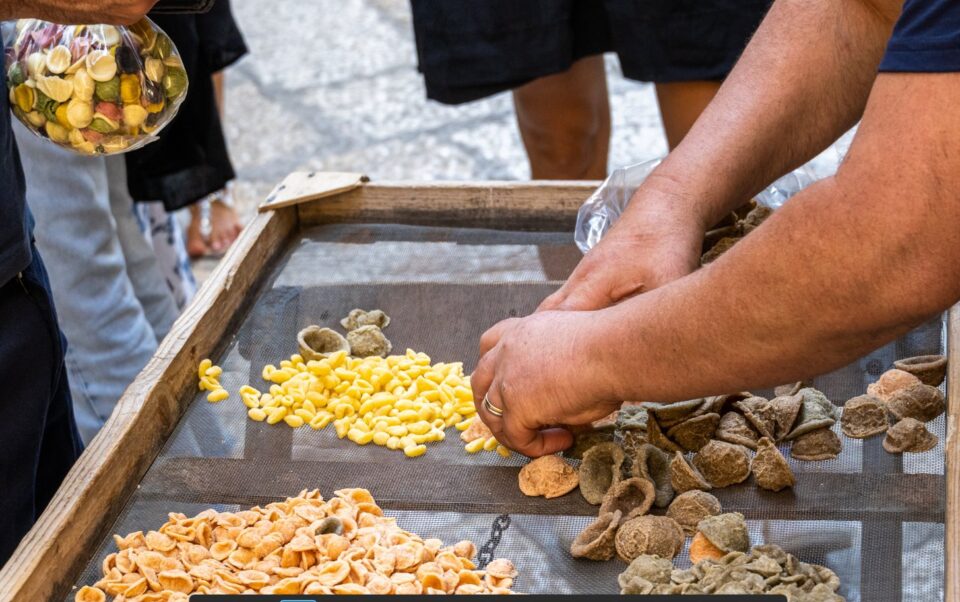
The region’s cuisine is based on typical products found within the surrounding region of Apulia: wheat, olive oil, seafood, and wine. Local flour is used in homemade bread and pasta production, including, most notably, the famous orecchiette ear-shaped pasta.
Homemade dough and olive oils are also used to bake fried panzerotti with mozzarella, and focaccia alla barese with tomatoes. Perhaps Bari’s most famous dish is the oven-baked Patate, riso e cozze (potatoes with rice and mussels). The whole Apulian region has a range of wines, including the classical Primitivo, Castel del Monte, Muscat, and most notably the recently emerging rosé wines.
The capital city of Puglia is Bari, a modern city that keeps strong ties with its own traditions. Bari has a maritime flavor and deserves a glance at the panoramic seafront promenade.